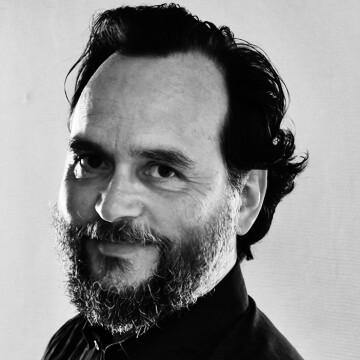
Leif Eliassen Neksum (left) and Peder Kjøs. Photo: Stian Sønsteng
Electrolux wants more people to wash at 30 degrees, and they have taken several technical steps to achieve this. But will Norwegian consumers change their washing habits?
- We are very focused on getting people to wash at lower temperatures. Not just to save electricity, but also to protect the clothes. By lowering the temperature, the clothes will last much longer, and you save a lot of electricity - 40 percent, says Leif Eliassen Neksum, head of education at Electrolux, to the trade magazine Elektronikkbransjen.
We meet him on 16 September, during an event at the recycling shop Cirkulær on Hegdehaugsveien in Oslo, where he shares the stage with Peder Kjøs, a well-known psychologist and author. A few journalists and many influencers are invited here in connection with Electrolux's campaign «30° holds», and Kjøs's task is to talk about habits, and what it takes to change them.
Annonse
‘30° holds’ is the motto for Electrolux's campaign to protect the environment. Photo: Stian Sønsteng
30 degrees standard
- I have read reports on the practical, technical and economic aspects of washing at lower temperatures, and I have probably myself been stuck in a slightly outdated understanding of both washing machines and detergents. In recent weeks, I have been washing in slightly colder water than before, and I don't think anyone notices any major difference, says Kjøs.
Our motivation for this campaign is to reduce consumption and thereby spare the planet we live on
- Changing habits is not easy. You have to make a decision and stick to it. Eventually, it becomes automatic. We have helped the consumer by having the machine start at 30 degrees as a default setting. Then you have to make an active decision to break that habit again, says Neksum.
Electrolux wants to dispel what they call myths about cold washing with their campaign, so that 30 degrees becomes the new standard. In addition to reducing electricity consumption, this can extend the lifespan of clothes by up to 50 percent.
Influencers and journalists participated in the event in Oslo. Photo: Stian Sønsteng
- Our motivation for this campaign is to reduce consumption and thereby protect the planet we live on, says Neksum.
Annonse
Don't believe clothes get clean
According to a survey commissioned by the company, only 19 percent of Norwegian consumers wash at 30 degrees or lower. Norway is therefore behind Denmark, where the proportion is one in three, and the rest of Europe, where the average is four in ten.
Training manager Leif Eliassen Neksum at Electrolux. Photo: Electrolux
Electrolux has calculated that if Norwegian households, which today wash at 40 degrees or more, lower the temperature to 30 degrees, this would lead to an electricity saving of 230 million kWh per year - or 4.3 million LED lights on for a year.
So what makes most people wash at warmer temperatures? According to the survey, the answer is a lack of trust that clothes will get clean (47 percent).
According to Neksum, there is no reason to worry.
Annonse
Make an overarching choice
- Machines are built differently today and detergents have active ingredients that work at lower temperatures. In the vast majority of cases, clothes get clean at 30 degrees or colder. If the clothes are really dirty, you obviously choose higher temperatures, says Neksum.
Psychologist and author Peder Kjøs. Photo: Electrolux
He admits that many react to the fact that underwear can be washed at 30 degrees.
- 30 degrees is sufficient for healthy people and is not recommended for those with underlying illnesses that require a more bacteria-free environment. The health authority has not published specific recommendations on washing temperatures for underwear, but general hygiene advice and recommendations are available through collaborating professional environments. Here it is stated that it is not necessarily healthy to wash underwear too often or at very high temperatures if you are healthy. In fact, excessive washing can remove the body's natural bacterial flora, which plays an important role in the immune system, says Neksum.
Some of the effects used during the campaign. Photo: Electrolux
All the arguments are true
During the Electrolux event at Circular, it is also said that the washing habits we have inherited from our parents should not necessarily be followed anymore. To change these, says Kjøs, one can make an overarching choice - which then becomes a habit.
Make a principled decision to wash at a lower temperature. Then the smaller choices follow naturally
- Make a principled choice to wash at a lower temperature. Then the smaller choices follow on their own: perhaps wash a little less often, use other detergents and stop using fabric softener. The standard setting at 30 degrees is wise. It's a bit like the smoking ban law - it's just the way it is, says Kjøs.
- Why are we Norwegians behind both the Danes and the rest of Europe?
- A simple answer is that electricity is cheap in Norway. In addition, we like to decide for ourselves. We can be stubborn, and once we have made up our minds, we have made up our minds, says Kjøs.
- I can recognise that. The electricity price has probably made us not think so much about the difference between 30, 40 and 60 degrees, adds Neksum.
- How can shop assistants have this conversation with customers?
Camilla Novik Woje runs the second-hand shop Cirkulær. Photo: Electrolux
The second-hand shop Cirkulär is located on Hegdehaugsveien in Oslo. Photo: Electrolux
- Tie it to what the person is interested in: taking care of clothes, saving money or being part of the green transition. All the arguments are true; find what matters to the person in front of you, says Kjøs.
The article was previously published in the print edition of the trade magazine Elektronikkbransjen no. 5/2025, which was distributed in week 41. Here you can read the article and browse through the digital edition of the magazine. You can read all editions of the magazine digitally, starting from no. 1/1937, at elektronikkbransjen.no/historiskarkiv.