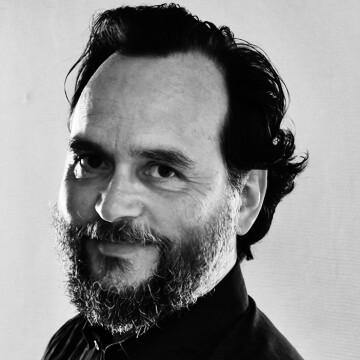
– Midea's first ECBC-approved coffee maker is based on a new form of technology and will make a mark in the market, says Martin Vinje.
He is an advisor for Midea through his company The Martin Vinje Company and has been central to the development of the coffee maker, which is approved by the European Coffee Brewing Centre in Oslo.
– The coffee sector is a strategic focus area for Midea, and we are now completing an approval process for this exciting coffee maker that will be launched under several different brands, says Vinje when we meet him in September at the Midea hall at the IFA fair in Berlin.
Annonse
– What makes it different from other coffee makers?
– There are a number of critical areas to get an approved coffee maker. We have overcome several challenges and developed a completely new, patented technology. It provides advantages compared to other approved brewers on the market, Vinje tells the trade magazine Elektronikkbransjen.
Little known in Norway
Chinese Midea is one of the world's largest suppliers of household appliances.
Annonse
– We do not make electronics or TVs, but only products for the home that are not entertainment. We have several brands: Midea as the main brand, in addition to Eureka and Toshiba. The latest addition is Teka, which is large in white goods in other parts of Europe, says Vinje.
We see a clear trend that the chains' own brands make up an ever-increasing share of sales
Coffee machine, multi-cooker and air fryer from Midea. Photo: Stian Sønsteng
– How does the situation look for Midea in Norway?
– In Norway and the Nordics, we are currently very active in OEM and the chains' own brands (private label). Midea supplies a range of products under other brands, and we see a clear trend that the chains' own brands constitute an ever-increasing share of sales. Midea's brand profile in Norway and the Nordics is not present, but strategies are being explored for how we should proceed with brand launching, says Vinje.
Marco Schrader is the category manager for hobs at Teka. Photo: Stian Sønsteng
IFA dream for Teka
He introduces us to Marco Schrader, category manager for hobs at Teka, which recently became part of Midea Group.
– Being at IFA is like a dream come true. We have always been an important brand on the Iberian Peninsula, in Poland, in Mexico, and in Chile. Being at IFA means we show that we have something to offer the whole world. This is the first time Teka is at IFA, and it happens because the integration with Midea opens the doors to the world, says Schrader.
Annonse
He tells us that Teka has over a hundred years of history:
– The company was founded in Germany in 1924, and in the 60s the factories were expanded in Spain. We start with sinks, move on to hoods and hobs, and expand from there. Based on our presence in Spain, we succeed well, first in Spain and Portugal, then in southern Europe and in Spanish-speaking markets, says Schrader to the trade magazine Elektronikkbransjen.
Teka's history dates back to 1924, when the company began producing agricultural machinery in Germany. Photo: Stian Sønsteng
Paella induction
Innovation is central:
– We have unique products that no one has dreamed of. For example, an induction hob with a rice function – you mix rice, water, and salt, close the lid, and the hob cooks the rice for you. In Spain, paella is an institution, and we have a hob that guides you step by step to a perfect paella. You can also make yoghurt at home. We have temperature sensors, and we prioritise cooking. We like artificial intelligence and connectivity, but in cooking, it should be at the heart of the devices, says Schrader.
Martin Vinje with three of Midea's air fryer machines. Photo: Stian Sønsteng
– Where is Teka developed and produced?
We have our factories in Europe: Spain, Portugal, Italy and Turkey
– The main environment is located in Santander in northern Spain. Each factory also has its own research and development centres, spread across Portugal and Spain – Zaragoza for ovens – and in Italy and Turkey, in Izmir. We have our factories in Europe: Spain, Portugal, Italy, and Turkey. These are one hundred percent original Teka factories. With the integration into Midea, production flexibility is expanded to cover different regions. The integration is going very well, and the future looks bright, says Schrader to the trade magazine Elektronikkbransjen.
Meaningful moments
Midea's acquisition of Teka Group was approved by the EU Commission in March 2025, after the deal was announced in June 2024. The acquisition gives Teka access to global markets and Midea's technology resources.
Washing and drying from Midea. Photo: Stian Sønsteng
About the brand Teka, Schrader says:
– Teka is unique. Many brands talk about technology and innovation; we focus on meaningful moments – what you create at home and share with your loved ones – and Teka comes second to support you, says Schrader.
Back with Vinje, the focus is clear:
– Coffee is a strategic focus area, and we have a solution that will soon hit the market. We work within the framework for approved coffee and see clear competitive advantages, says Vinje.
The Midea MA-HD1201A2 coffee maker. Photo: Stian Sønsteng
The Midea MA-FACM1004A2 coffee machine. Photo: Stian Sønsteng
The Midea MA-FACM1006A2 coffee machine. Photo: Stian Sønsteng
The article was previously published in the print edition of the trade magazine Elektronikkbransjen no. 6/2025, which was distributed in week 48. Here you can read the article and browse through the digital edition of the magazine. You can read all issues of the magazine digitally, from issue no. 1/1937, at elektronikkbransjen.no/historiskarkiv.