
OLED IS BEST FOR MANY

Alf Leifseth (left) and Snorre Berg Domaas with the Samsung S99H, which is the company’s first OLED TV with ArtStore. Photo: Stian Sønsteng

– For many customers, OLED is the best TV they can get, and more new models are now arriving at reasonable prices, says product manager Alf Leifseth at Power.

Modified

When we meet him and Snorre Berg Domaas at the PowerUp CE training fair at the end of April, the two are clear about which TV technology they have the highest expectations for going forward.

– OLED has often been on the top shelf in terms of price. When we see the new models and the new price levels, they have become significantly more accessible to most people. In connection with the Football World Cup, I think many people will replace their TV, and then there will probably be many who choose an OLED, says Domaas, who is sales manager for audio and video at Power Norway.

Leifseth says OLED suits everyone, including gamers.

– There is zero response time, and burn-in is no longer a problem. Today, OLED is available in all sizes, from 42 to 83 inches, and you have the full range in different price classes. What is most exciting right now is that you can get a 55-inch OLED at a fixed price down towards NOK 10,000, says Leifseth.


LG OLED C6 succeeds the C5 and C4, both of which have been test winners. Photo: Stian Sønsteng

The customer’s use is decisive

– Your shop salespeople are learning here at PowerUp that they should recommend OLED as a first choice?

– What we recommend depends on the customer’s needs. Some watch series and regular linear TV, others play games, while a third group uses the TV for films. Therefore, it is important that we help the customer carry out a good needs analysis, says Domaas.

– We never push anything on anyone, but guide the customer to make a choice they will be very pleased with, says Leifseth.

Domaas agrees with Leifseth that the range is broad.

– We feel that we have a very good range this year. Perhaps better than for many, many years, says Domaas.

– It is an important part of the picture that both Koreans are investing heavily in OLED this year, says Leifseth.


Four TV suppliers

In addition to Samsung and LG, Domaas highlights Sharp and Cepter on the TV front.

– Samsung, LG and Sharp account for the majority of our sales. In addition, there is Cepter, which is our own brand, says Domaas.

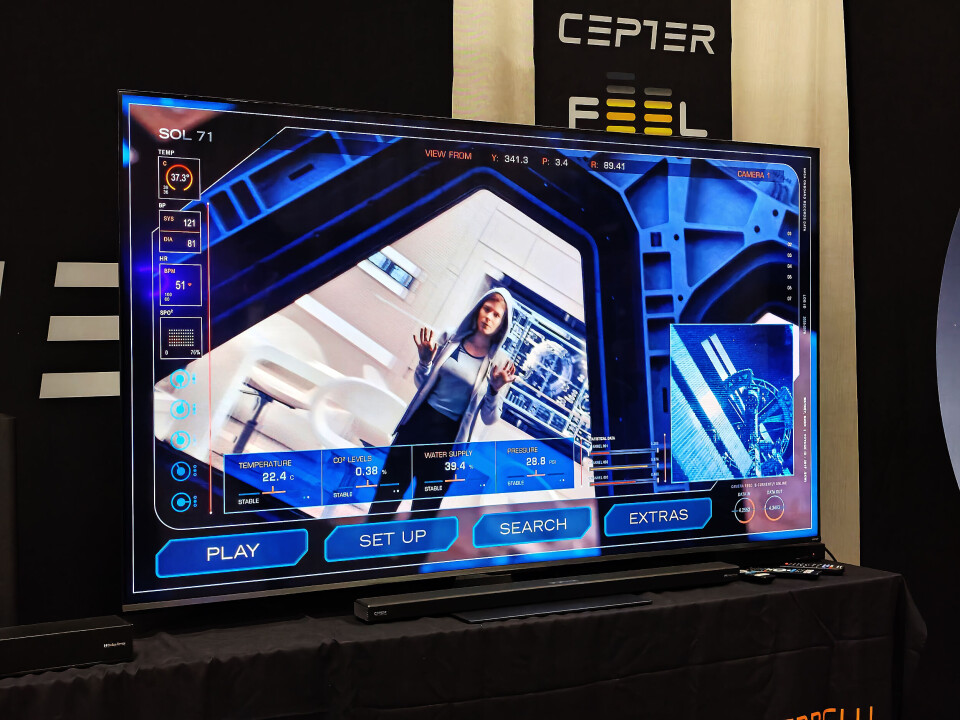
Cepter ZM1000 is a Mini LED with Full Array Dimming. Photo: Stian Sønsteng

– Here we have used the best components, including panels and graphics cards, and put together our own model, just as we want it, says Leifseth.

Domaas says the Cepter models are adapted to the Nordic market.

– We use our experience when it comes to what customers in the Nordic region want. It may be about design fronts, operating system, menus, the appearance of the TV and reassurance in the form of a five-year guarantee, for example, says Domaas.

Leifseth says the placement of the stand is one concrete example.


The RGB TV technology

– In the Nordic region, people want a centrally positioned stand, so of course we offer this, says Leifseth.

– Did you think this would become an issue?

– No, perhaps not originally, but there are many opinions about this. We notice that not least when we speak with the sales staff here at PowerUp, says Domaas.

The two also say they have expectations for the new RGB TV technology.

– This is coming in full force. This is a further development of LED, with extra-bright picture elements with subpixels in red, green and blue for more precise colour and greyscale reproduction. There are two variants here, micro-RGB and backlit RGB. We envisage that the latter, which is more affordable than micro-RGB, will become a popular contributor to TV sales, says Leifseth.

The article was previously published in the print edition of the trade magazine Elektronikkbransjen no. 3/2026, which was distributed in week 24. Here you can read the article and browse through the digital edition of the magazine. You can read all editions of the magazine digitally, from no. 1/1937 onwards, at elektronikkbransjen.no/historiskarkiv.


Powered by Labrador CMS