ELON WANTS TO TURN RESULTS AROUND
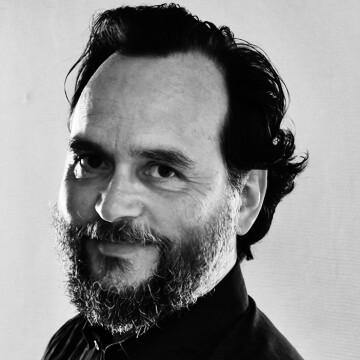
Country manager Knut Grimstad (left) and Group CEO Henrik Aronsson at Elon. Photo: Stian Sønsteng
Elon has not been profitable since 2022. Now Group CEO Henrik Aronsson is working to turn the results around and tidy up the governance structure.
The Elon Group has been through a demanding period of unprofitable operations, an unclear store structure and weak market understanding. Group CEO Henrik Aronsson took up the role eight months ago, is clear about the challenges the company has faced, and says he has worked in parallel on corporate governance and profitability.
– It has been a turbulent start. Relatively quickly after I began, we had a great deal to deal with in terms of governance and control, where there was a lot of old business to address. The company has not been profitable since 2022, and we can look back on three years of negative results, Henrik Aronsson tells the trade magazine Elektronikkbransjen.
After Hans-Eric Schultz stepped down as country manager for Norway, sales director Knut Grimstad has served in the position. According to Aronsson, he has done so well that the arrangement is now being made permanent.
Norway requires local knowledge
We meet the two of them in the first week of May, during the Elon Expo training fair in Örebro.
Aronsson describes Norway as Europe’s most centralised market, where two players have almost a 90 per cent market share. He believes Elon’s previous management underestimated this structure.
– A typical Swedish mistake is to enter, for example, Norway and think that we can probably run this from Sweden. And we send some Swedish chap over there. That is not how it works, neither in Norway nor Sweden nor Denmark. You need local knowledge, you need knowledge of the stores, the market, the people and the suppliers.
Knut Grimstad has worked in the industry since 1999 and in the organisation in Norway since 2007. He points out that the framework is now clearer than ever before.
– This is the biggest change in the company, and it is a very great advantage because it gives us room for manoeuvre that is very clear and distinct. That makes it easy to make the right decisions, says Grimstad.
Fewer, but better stores
Elon has 330 stores in Sweden, which Aronsson describes as overexpansion. The number is not the result of market demand, but of previous mergers. As an example, Aronsson points to a town with 25,000 inhabitants and four Elon stores.
– The town’s total investments in consumer electronics and white goods have to be divided by four, while the costs must be multiplied by four. There is no financial sense in that. Then it is better to create one store and make sure it has full breadth, says Aronsson.
– What position does Elon have in the Norwegian market?
– Our concept is to be local, close to the customer. We have smaller units, and we must be able to justify that by operating more efficiently and allowing more of the money to go to the members. The challenge is if the stores are too small, since costs have increased, says Grimstad.
Museum versus shop
Aronsson is positive about Elon’s “Welcome home” store concept, but believes it needs adjustments to become more sales-driven. He uses the grocery sector as a basis for comparison.
– “Retail is dying,” people said a few years ago. And then someone else said: “Boring retail is dying.” And I’m like: yes, damn it, there is something in that. If shops become too polished, they almost turn into dollhouses and museums. That is “boring retail”, and we cannot keep doing that. A good shop should have a natural flow, so that customers are guided through the premises in a well-considered way, and things need to be happening in the shop, Aronsson tells the trade magazine Elektronikkbransjen.
Kitchens are becoming more important
Elon is continuing to invest in the Nordanro kitchen concept, which is available in the Premium and Flex variants and with new fronts, as well as a fourth variant called Flex Express, adapted for smaller shops. Grimstad says the concept has been launched in around 20 shops in Norway.
– The concept is strong. But, of course, it needs to mature in the market. We see that the shops that make this move have dedicated staff who succeed over time, but it requires an investment, says Grimstad.
Aronsson points out that each kitchen sells between four and five white goods on average, and that kitchens are therefore strategically important for the white goods part of the range.
– "Welcome home" and Nordanro fit together quite well. In the past, the focal point of the home was the living room and the new TV. Now it has shifted more and more towards the kitchen, says the group chief executive.
Own brands in moderation
Aronsson believes own brands will continue to play an important role, but warns against them becoming too dominant.
– They must not become too important. Our suppliers represent fantastic and established brands that are incredibly skilled at what they do, and of course we must constantly sell their products and their innovations, since they drive people to our stores, says Aronsson.
He himself comes from the supplier side, after a number of years at Samsung.
– That is why I also know our competitors well. We belong to a small industry, and I would therefore like both to send my regards to our competitors, while also extending a big thank you to our own stores and suppliers for their patience and support in the restructuring process we are in, says Aronsson.