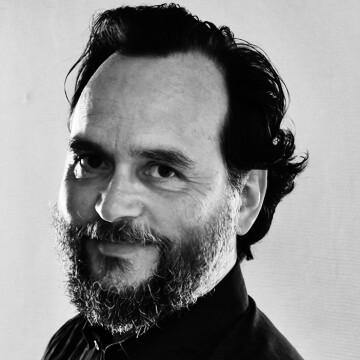
Sten Kirkbak at Xplora Technologies. Photo: Stian Sønsteng
Xplora started in 2017 with GPS watches for children. Since then, it has acquired Doro and Emporia, which make mobile phones for seniors. The goal is to sell subscriptions.
– Today, it is the devices that drive subscription sales. In the long term, we will scale services independently of our own products, says Sten Kirkbak of the listed company Xplora Technologies AS to the trade magazine Elektronikkbransjen.
When he established Xplora in 2016, he felt that in Norway people are often more concerned with the product itself than with developing the business.
– In addition, access to capital is limited, because it is difficult to create major value here. As a result, fewer succeed internationally, says Kirkbak.
Annonse
When we meet him on 16 March at the company’s head office in the centre of Oslo, only a few hours have passed since it became publicly known that Xplora Technologies AS is acquiring Austria’s Emporia Group, the market leader in senior mobile phones in Germany, Austria and Switzerland. Xplora already has Sweden’s Doro in its portfolio. We will return to what these acquisitions mean.
From the premises, Sten Kirkbak at Xplora looks straight across the courtyard to Scandinavian Photo in Steen & Strøm. Photo: Stian Sønsteng
Largest shareholder
– When Xplora was established, there were few Norwegian technology environments to lean on. In practice, we had to manage on our own, and therefore quickly looked beyond Norway. The strategy was to replicate what worked here at home, first in Sweden, then in larger markets such as Germany, says Kirkbak.
The idea for a children’s watch with GPS came to him in the brief moment when his son was out of his sight in a shopping centre. Today, he is the company’s chief executive, with an ownership stake of around five per cent. The largest shareholder is Tore Engebretsen, chairman of the board, with 10.63 per cent.
Annonse
– He is also a mentor to me, and has done many exciting things in technology.
– Has it always been the plan to focus on subscriptions and services?
Xplora started in 2016 with GPS watches for children. Photo: Xplora
– We think two to three years ahead and adjust the plan along the way. A few years ago, we said that we would have one million subscriptions, and that they would come from three verticals: children, young people and seniors. As long as we follow this goal, we need to have the opportunity to manoeuvre very freely along the way according to market opportunities that arise, for example acquisitions. But, as Tore Engebretsen says, one should be aware that the only plan that is certain is that it will change as you go, Kirkbak tells the trade magazine Elektronikkbransjen.
Acquisitions as a growth engine
Mergers and acquisitions (M&A) quickly became part of Xplora’s strategy. The first acquisition took place when the company was listed on the stock exchange in 2020.
– It is about finding the point at which acquisitions provide a higher return than organic growth, says Kirkbak.
Annonse
He points out that the acquisition of Sweden’s Doro, announced in September 2024, significantly lifted the market value in a short space of time. With the planned acquisition of Austria’s Emporia, Xplora is adding around 300,000 mobile phones sold annually on top of existing volume, while the organisations, with their similar structures, make cost synergies possible from day one.
In the short term, the devices are the driver for subscriptions, but over time the services will become stronger.
Miina Seppälä shows Xplora One at MWC in March. Photo: Stian Sønsteng
Around 40 per cent of the children’s watches Xplora sells are linked to the company’s own mobile subscription. For Doro, which sells around twice as many mobile phones, the ambition is more modest:
– If we manage to sell subscriptions for just 10 per cent of these mobile phones, we will improve the annual operating profit by NOK 300 million. There is such an extremely large financial upside in achieving this with Doro and SIM cards that, in the short term, it will be the most important thing we do, says Kirkbak.
GDPR as a foundation
When Xplora launched its first children’s watch in 2017, it had spent the whole of 2016 building a platform for secure data processing.
Doro Aurora A31. NOK 4,000. Photo: Doro
– We wanted all data to go through our platform, and for it to be linked to the regulatory framework, says Kirkbak.
When the authorities’ GDPR tightening came, Xplora was left with the right to process data where several competitors fell away. This gave the company a significant head start in the establishment phase.
– We achieved fantastic scaling at the start, says Kirkbak.
He describes today’s competition as stable, with two to three players in each market, and almost none operating broadly across countries.
– There are few markets where there is an established competitor operating across borders. There, we are quite alone, says Kirkbak.
He says Xplora’s business model with its own subscription also creates room for better support for retail and marketing.
– On a good day we earn a few hundred kroner on the watch; on subscriptions we earn six to eight times more. That gives us completely different opportunities, says Kirkbak.
The head of Xplora says sales are distributed at roughly 20 per cent via its own channels (including Amazon and online), 40 per cent via retail, and 40 per cent via telecom operators.
– Ideally, we want more through our own channels and more in retail, says Kirkbak.
– The most dissatisfied customers are those who do not choose our SIM card. That is when challenges often arise related to activation, data plan and top-up, he says.
Xplora believes that, in practice, the pricing ends up being fairly similar regardless, and that customer support is easier when the device and subscription come from the same provider.
– Those who buy a subscription elsewhere find that any savings are cancelled out, says Kirkbak.
Elektronikkbransjen meets him at Xplora Technologies’ premises in the heart of central Oslo. Behind an anonymous outer door in Kongens gate, a modest entrance area and a lift ride up through the floors, large and lavish premises spread across two storeys open up. From the reception, we can see straight across the courtyard to Scandinavian Photo’s shop in Steen & Strøm.
– I believe we get more out of colleagues who work together. Then it has to be a place where people want to be, says Kirkbak about the premises.
During the interview, he is joined by Norwegian marketing manager Stina Winther, who describes a working environment with a high degree of trust and a fast pace.
Xplora X6Play. NOK 2,500. Photo: Xplora
– You get to try things. And I believe in the social mission; I do not want my children to grow up on a smartphone, she says.
– We make things happen, dare to do things others do not dare to do, and have employees who believe in our mission, says Kirkbak.
Scandinavian heritage and values
He says Xplora deliberately builds on a Scandinavian expression in form and identity, and points to three value pillars: family first, being courageous and trustworthy, with transparency internally and externally.
– Family first, courageous choices, and that we are trusted and transparent. If we manage that, we can move mountains, says Kirkbak, adding that this may be perceived as somewhat un-Norwegian.
– It feels good that there are still “Vikings” who just keep pushing ahead, he says.
As for the acquisition of Doro, Kirkbak says they are now entering a phase where the actual synergies can be realised.
Sten Kirkbak at Xplora Technologies. Photo: Stian Sønsteng
– First, we had to get ownership up to at least 90 per cent so that we could redeem the remaining shares. We are almost finished with this, and it is only then that we are allowed to begin a physical integration. For almost a year now, we have reported as a group, with revenue of approximately NOK 2 billion and operating profit of around a quarter of a billion Norwegian kroner (EBITDA), Kirkbak tells the trade magazine Elektronikkbransjen.
He is looking forward to the expertise within the companies, for example in research and development, being combined and brought together.
– We expect around 30 million in pure cost synergies when we merge the companies, says Kirkbak.
The senior division will retain its head office at Doro in Malmö. As for Austria’s Emporia, Kirkbak says there will be some clear synergies here, since they and Xplora have a similar organisational structure.
– Doro sells around one million mobile phones a year, while Emporia sells about 300,000. The strategy for the acquisitions is exactly the same. As with Doro, we will pre-install our SIM cards, and with Emporia we can immediately deliver our SIM cards in their mobile phones while we wait for the formal review (due diligence) to go through, says Kirkbak.
Doro and Emporia going forward
Norway accounts for around 12 per cent of Xplora’s market, measured by volume.
Xplora sells watches and mobile phones for children. Photo: Xplora
– The market outside Norway is the most important driver of volume, but we have the most subscriptions in Norway because we have been operating here the longest, says Kirkbak.
– What does it mean internationally that you are a Norwegian company?
– When we meet new customers, for four or five seconds we get free credibility. But then it quickly turns to the fact that so few others from Norway have succeeded. Even so, we use our Scandinavian heritage in our design and expression, says Kirkbak.
He says Xplora wants to build a staircase of products and services from children to teenagers and onwards to seniors.
– In the long term, mobile phones may also become bigger than the children’s watches for children and teenagers, says Kirkbak.
With Doro and a planned acquisition of Emporia, Xplora gets a portfolio in the senior segment that brings volume into subscriptions.
Roy Westbye (from left), Johnny Davou, Miina Seppälä and Timo Vaskio at the joint exhibition by Xplora and Doro during MWC in March. Photo: Stian Sønsteng
– We must be clear that we can scale services independently of our own devices, but the devices are still the driver in the short term, he says.
Kirkbak says integrating the companies will be the first priority over the next two to three years.
– We have half a million children’s smartwatch subscriptions, and we sell around half a million children’s smartwatches a year. Doro and Emporia sell several times that in the senior market. That is where the work lies, he says.
– What will happen to the brands?
– Doro and Emporia are strong. We must be humble about that, and they will live on, says Kirkbak.
The article was previously published in the print edition of the trade magazine Elektronikkbransjen No. 2/2026, which was distributed in week 16. Here you can read the article and browse through the digital edition of the magazine. You can read all editions of the magazine digitally, starting with No. 1/1937, at elektronikkbransjen.no/historiskarkiv.